AI App Video Generator Free

AI App Video Generator Free — independent reviews, comparisons, pricing and step-by-step guides on Aizhi.

  • Autocommit

    Autocommit

    In the context of data management, autocommit is a mode of operation of a database connection. Each individual database interaction (i.e., each SQL statement) submitted through the database connection in autocommit mode will be executed in its own transaction that is implicitly committed. A SQL statement executed in autocommit mode cannot be rolled back. Autocommit mode incurs per-statement transaction overhead and can often lead to undesirable performance or resource utilization impact on the database. Nonetheless, in systems such as Microsoft SQL Server, as well as connection technologies such as ODBC and Microsoft OLE DB, autocommit mode is the default for all statements that change data, in order to ensure that individual statements will conform to the ACID (atomicity-consistency-isolation-durability) properties of transactions. The alternative to autocommit mode (non-autocommit) means that the SQL client application itself is responsible for ending transactions explicitly via the commit or rollback SQL commands. Non-autocommit mode enables grouping of multiple data manipulation SQL commands into a single atomic transaction. Some DBMS (e.g. MariaDB) force autocommit for every DDL statement, even in non-autocommit mode. In this case, before each DDL statement, previous DML statements in transaction are autocommitted. Each DDL statement is executed in its own new autocommit transaction.

    Read more →
  • AlphaGo Zero

    AlphaGo Zero

    AlphaGo Zero is a version of DeepMind's Go software AlphaGo. AlphaGo's team published an article in Nature in October 2017 introducing AlphaGo Zero, a version created without using data from human games, and stronger than any previous version. By playing games against itself, AlphaGo Zero: surpassed the strength of AlphaGo Lee in three days by winning 100 games to 0; reached the level of AlphaGo Master in 21 days; and exceeded all previous versions in 40 days. Training artificial intelligence (AI) without datasets derived from human experts has significant implications for the development of AI with superhuman skills, as expert data is "often expensive, unreliable, or simply unavailable." Demis Hassabis, the co-founder and CEO of DeepMind, said that AlphaGo Zero was so powerful because it was "no longer constrained by the limits of human knowledge". Furthermore, AlphaGo Zero performed better than standard deep reinforcement learning models (such as Deep Q-Network implementations) due to its integration of Monte Carlo tree search. David Silver, one of the first authors of DeepMind's papers published in Nature on AlphaGo, said that it is possible to have generalized AI algorithms by removing the need to learn from humans. Google later developed AlphaZero, a generalized version of AlphaGo Zero that could play chess and shōgi in addition to Go. In December 2017, AlphaZero beat the 3-day version of AlphaGo Zero by winning 60 games to 40, and with 8 hours of training it outperformed AlphaGo Lee on an Elo scale. AlphaZero also defeated a top chess program (Stockfish) and a top Shōgi program (Elmo). == Architecture == The network in AlphaGo Zero is a ResNet with two heads. The stem of the network takes as input a 17x19x19 tensor representation of the Go board. 8 channels are the positions of the current player's stones from the last eight time steps. (1 if there is a stone, 0 otherwise. If the time step go before the beginning of the game, then 0 in all positions.) 8 channels are the positions of the other player's stones from the last eight time steps. 1 channel is all 1 if black is to move, and 0 otherwise. The body is a ResNet with either 20 or 40 residual blocks and 256 channels. There are two heads, a policy head and a value head. Policy head outputs a logit array of size 19 × 19 + 1 {\displaystyle 19\times 19+1} , representing the logit of making a move in one of the points, plus the logit of passing. Value head outputs a number in the range ( − 1 , + 1 ) {\displaystyle (-1,+1)} , representing the expected score for the current player. -1 represents current player losing, and +1 winning. == Training == AlphaGo Zero's neural network was trained using TensorFlow, with 64 GPU workers and 19 CPU parameter servers. Only four TPUs were used for inference. The neural network initially knew nothing about Go beyond the rules. Unlike earlier versions of AlphaGo, Zero only perceived the board's stones, rather than having some rare human-programmed edge cases to help recognize unusual Go board positions. The AI engaged in reinforcement learning, playing against itself until it could anticipate its own moves and how those moves would affect the game's outcome. In the first three days AlphaGo Zero played 4.9 million games against itself in quick succession. It appeared to develop the skills required to beat top humans within just a few days, whereas the earlier AlphaGo took months of training to achieve the same level. According to Epoch.ai, training cost 3e23 FLOPs. For comparison, the researchers also trained a version of AlphaGo Zero using human games, AlphaGo Master, and found that it learned more quickly, but actually performed more poorly in the long run. DeepMind submitted its initial findings in a paper to Nature in April 2017, which was then published in October 2017. == Hardware cost == The hardware cost for a single AlphaGo Zero system in 2017, including the four TPUs, has been quoted as around $25 million. == Applications == According to Hassabis, AlphaGo's algorithms are likely to be of the most benefit to domains that require an intelligent search through an enormous space of possibilities, such as protein folding (see AlphaFold) or accurately simulating chemical reactions. AlphaGo's techniques are probably less useful in domains that are difficult to simulate, such as learning how to drive a car. DeepMind stated in October 2017 that it had already started active work on attempting to use AlphaGo Zero technology for protein folding, and stated it would soon publish new findings. == Reception == AlphaGo Zero was widely regarded as a significant advance, even when compared with its groundbreaking predecessor, AlphaGo. Oren Etzioni of the Allen Institute for Artificial Intelligence called AlphaGo Zero "a very impressive technical result" in "both their ability to do it—and their ability to train the system in 40 days, on four TPUs". The Guardian called it a "major breakthrough for artificial intelligence", citing Eleni Vasilaki of Sheffield University and Tom Mitchell of Carnegie Mellon University, who called it an impressive feat and an “outstanding engineering accomplishment" respectively. Mark Pesce of the University of Sydney called AlphaGo Zero "a big technological advance" taking us into "undiscovered territory". Gary Marcus, a psychologist at New York University, has cautioned that for all we know, AlphaGo may contain "implicit knowledge that the programmers have about how to construct machines to play problems like Go" and will need to be tested in other domains before being sure that its base architecture is effective at much more than playing Go. In contrast, DeepMind is "confident that this approach is generalisable to a large number of domains". In response to the reports, South Korean Go professional Lee Sedol said, "The previous version of AlphaGo wasn’t perfect, and I believe that’s why AlphaGo Zero was made." On the potential for AlphaGo's development, Lee said he will have to wait and see but also said it will affect young Go players. Mok Jin-seok, who directs the South Korean national Go team, said the Go world has already been imitating the playing styles of previous versions of AlphaGo and creating new ideas from them, and he is hopeful that new ideas will come out from AlphaGo Zero. Mok also added that general trends in the Go world are now being influenced by AlphaGo's playing style. "At first, it was hard to understand and I almost felt like I was playing against an alien. However, having had a great amount of experience, I’ve become used to it," Mok said. "We are now past the point where we debate the gap between the capability of AlphaGo and humans. It’s now between computers." Mok has reportedly already begun analyzing the playing style of AlphaGo Zero along with players from the national team. "Though having watched only a few matches, we received the impression that AlphaGo Zero plays more like a human than its predecessors," Mok said. Chinese Go professional Ke Jie commented on the remarkable accomplishments of the new program: "A pure self-learning AlphaGo is the strongest. Humans seem redundant in front of its self-improvement." == Comparison with predecessors == == AlphaZero == On 5 December 2017, DeepMind team released a preprint on arXiv, introducing AlphaZero, a program using generalized AlphaGo Zero's approach, which achieved within 24 hours a superhuman level of play in chess, shogi, and Go, defeating world-champion programs, Stockfish, Elmo, and 3-day version of AlphaGo Zero in each case. AlphaZero (AZ) is a more generalized variant of the AlphaGo Zero (AGZ) algorithm, and is able to play shogi and chess as well as Go. Differences between AZ and AGZ include: AZ has hard-coded rules for setting search hyperparameters. The neural network is now updated continually. Chess (unlike Go) can end in a tie; therefore AZ can take into account the possibility of a tie game. An open source program, Leela Zero, based on the ideas from the AlphaGo papers is available. It uses a GPU instead of the TPUs recent versions of AlphaGo rely on.

    Read more →
  • Stanford Research Institute Problem Solver

    Stanford Research Institute Problem Solver

    The Stanford Research Institute Problem Solver, known by its acronym STRIPS, is an automated planner developed by Richard Fikes and Nils Nilsson in 1971 at SRI International. The same name was later used to refer to the formal language of the inputs to this planner. This language is the base for most of the languages for expressing automated planning problem instances in use today; such languages are commonly known as action languages. This article only describes the language, not the planner. == Definition == A STRIPS instance is composed of: An initial state; The specification of the goal states – situations that the planner is trying to reach; A set of actions. For each action, the following are included: preconditions (what must be established before the action is performed); postconditions (what is established after the action is performed). Mathematically, a STRIPS instance is a quadruple ⟨ P , O , I , G ⟩ {\displaystyle \langle P,O,I,G\rangle } , in which each component has the following meaning: P {\displaystyle P} is a set of conditions (i.e., propositional variables); O {\displaystyle O} is a set of operators (i.e., actions); each operator is itself a quadruple ⟨ α , β , γ , δ ⟩ {\displaystyle \langle \alpha ,\beta ,\gamma ,\delta \rangle } , each element being a set of conditions. These four sets specify, in order, which conditions must be true for the action to be executable, which ones must be false, which ones are made true by the action and which ones are made false; I {\displaystyle I} is the initial state, given as the set of conditions that are initially true (all others are assumed false); G {\displaystyle G} is the specification of the goal state; this is given as a pair ⟨ N , M ⟩ {\displaystyle \langle N,M\rangle } , which specify which conditions are true and false, respectively, in order for a state to be considered a goal state. A plan for such a planning instance is a sequence of operators that can be executed from the initial state and that leads to a goal state. Formally, a state is a set of conditions: a state is represented by the set of conditions that are true in it. Transitions between states are modeled by a transition function, which is a function mapping states into new states that result from the execution of actions. Since states are represented by sets of conditions, the transition function relative to the STRIPS instance ⟨ P , O , I , G ⟩ {\displaystyle \langle P,O,I,G\rangle } is a function succ : 2 P × O → 2 P , {\displaystyle \operatorname {succ} :2^{P}\times O\rightarrow 2^{P},} where 2 P {\displaystyle 2^{P}} is the set of all subsets of P {\displaystyle P} , and is therefore the set of all possible states. The transition function succ {\displaystyle \operatorname {succ} } for a state C ⊆ P {\displaystyle C\subseteq P} , can be defined as follows, using the simplifying assumption that actions can always be executed but have no effect if their preconditions are not met: The function succ {\displaystyle \operatorname {succ} } can be extended to sequences of actions by the following recursive equations: succ ⁡ ( C , [ ] ) = C {\displaystyle \operatorname {succ} (C,[\ ])=C} succ ⁡ ( C , [ a 1 , a 2 , … , a n ] ) = succ ⁡ ( succ ⁡ ( C , a 1 ) , [ a 2 , … , a n ] ) {\displaystyle \operatorname {succ} (C,[a_{1},a_{2},\ldots ,a_{n}])=\operatorname {succ} (\operatorname {succ} (C,a_{1}),[a_{2},\ldots ,a_{n}])} A plan for a STRIPS instance is a sequence of actions such that the state that results from executing the actions in order from the initial state satisfies the goal conditions. Formally, [ a 1 , a 2 , … , a n ] {\displaystyle [a_{1},a_{2},\ldots ,a_{n}]} is a plan for G = ⟨ N , M ⟩ {\displaystyle G=\langle N,M\rangle } if F = succ ⁡ ( I , [ a 1 , a 2 , … , a n ] ) {\displaystyle F=\operatorname {succ} (I,[a_{1},a_{2},\ldots ,a_{n}])} satisfies the following two conditions: N ⊆ F {\displaystyle N\subseteq F} M ∩ F = ∅ {\displaystyle M\cap F=\varnothing } == Extensions == The above language is actually the propositional version of STRIPS; in practice, conditions are often about objects: for example, that the position of a robot can be modeled by a predicate A t {\displaystyle At} , and A t ( r o o m 1 ) {\displaystyle At(room1)} means that the robot is in Room1. In this case, actions can have free variables, which are implicitly existentially quantified. In other words, an action represents all possible propositional actions that can be obtained by replacing each free variable with a value. The initial state is considered fully known in the language described above: conditions that are not in I {\displaystyle I} are all assumed false. This is often a limiting assumption, as there are natural examples of planning problems in which the initial state is not fully known. Extensions of STRIPS have been developed to deal with partially known initial states. == A sample STRIPS problem == A monkey is at location A in a lab. There is a box in location C. The monkey wants the bananas that are hanging from the ceiling in location B, but it needs to move the box and climb onto it in order to reach them. Initial state: At(A), Level(low), BoxAt(C), BananasAt(B) Goal state: Have(bananas) Actions: // move from X to Y _Move(X, Y)_ Preconditions: At(X), Level(low) Postconditions: not At(X), At(Y) // climb up on the box _ClimbUp(Location)_ Preconditions: At(Location), BoxAt(Location), Level(low) Postconditions: Level(high), not Level(low) // climb down from the box _ClimbDown(Location)_ Preconditions: At(Location), BoxAt(Location), Level(high) Postconditions: Level(low), not Level(high) // move monkey and box from X to Y _MoveBox(X, Y)_ Preconditions: At(X), BoxAt(X), Level(low) Postconditions: BoxAt(Y), not BoxAt(X), At(Y), not At(X) // take the bananas _TakeBananas(Location)_ Preconditions: At(Location), BananasAt(Location), Level(high) Postconditions: Have(bananas) == Complexity == Deciding whether any plan exists for a propositional STRIPS instance is PSPACE-complete. Various restrictions can be enforced in order to decide if a plan exists in polynomial time or at least make it an NP-complete problem. == Macro operator == In the monkey and banana problem, the robot monkey has to execute a sequence of actions to reach the banana at the ceiling. A single action provides a small change in the game. To simplify the planning process, it make sense to invent an abstract action, which isn't available in the normal rule description. The super-action consists of low level actions and can reach high-level goals. The advantage is that the computational complexity is lower, and longer tasks can be planned by the solver. Identifying new macro operators for a domain can be realized with genetic programming. The idea is, not to plan the domain itself, but in the pre-step, a heuristics is created that allows the domain to be solved much faster. In the context of reinforcement learning, a macro-operator is called an option. Similar to the definition within AI planning, the idea is, to provide a temporal abstraction (span over a longer period) and to modify the game state directly on a higher layer.

    Read more →
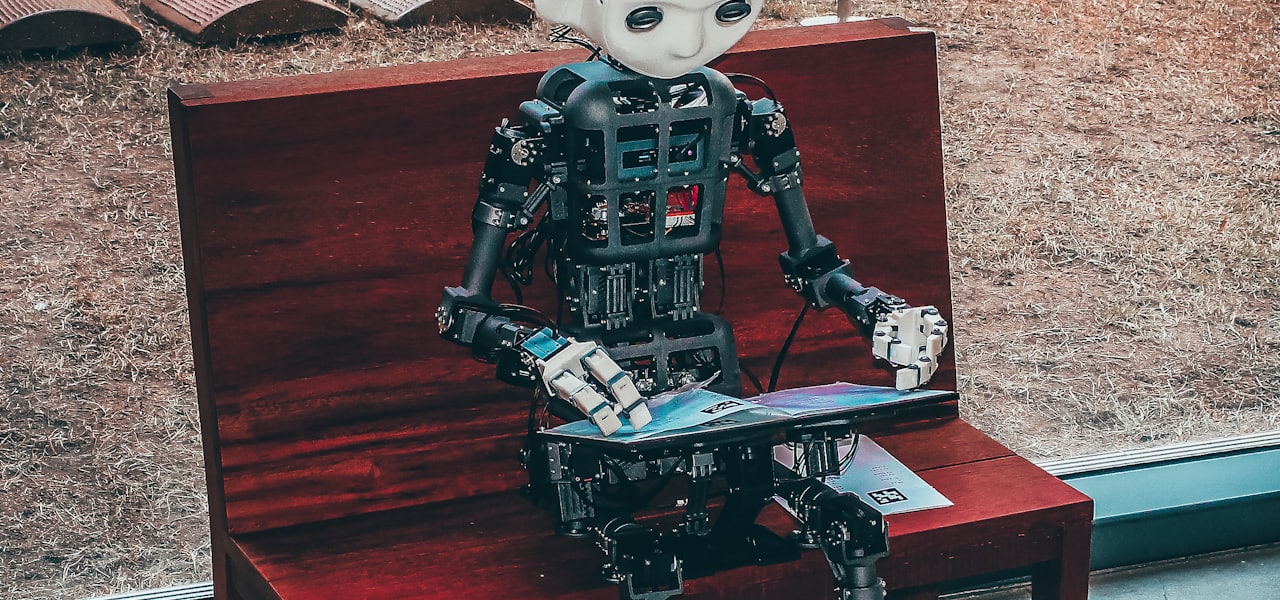
  • User modeling

    User modeling

    User modeling is the subdivision of human–computer interaction which describes the process of building up and modifying a conceptual understanding of the user. The main goal of user modeling is customization and adaptation of systems to the user's specific needs. The system needs to "say the 'right' thing at the 'right' time in the 'right' way". To do so it needs an internal representation of the user. Another common purpose is modeling specific kinds of users, including modeling of their skills and declarative knowledge, for use in automatic software-tests. User-models can thus serve as a cheaper alternative to user testing but should not replace user testing. == Background == A user model is the collection and categorization of personal data associated with a specific user. A user model is a (data) structure that is used to capture certain characteristics about an individual user, and a user profile is the actual representation in a given user model. The process of obtaining the user profile is called user modeling. Therefore, it is the basis for any adaptive changes to the system's behavior. Which data is included in the model depends on the purpose of the application. It can include personal information such as users' names and ages, their interests, their skills and knowledge, their goals and plans, their preferences and their dislikes or data about their behavior and their interactions with the system. There are different design patterns for user models, though often a mixture of them is used. Static user models Static user models are the most basic kinds of user models. Once the main data is gathered they are normally not changed again, they are static. Shifts in users' preferences are not registered and no learning algorithms are used to alter the model. Dynamic user models Dynamic user models allow a more up to date representation of users. Changes in their interests, their learning progress or interactions with the system are noticed and influence the user models. The models can thus be updated and take the current needs and goals of the users into account. Stereotype based user models Stereotype based user models are based on demographic statistics. Based on the gathered information users are classified into common stereotypes. The system then adapts to this stereotype. The application therefore can make assumptions about a user even though there might be no data about that specific area, because demographic studies have shown that other users in this stereotype have the same characteristics. Thus, stereotype based user models mainly rely on statistics and do not take into account that personal attributes might not match the stereotype. However, they allow predictions about a user even if there is rather little information about him or her. Highly adaptive user models Highly adaptive user models try to represent one particular user and therefore allow a very high adaptivity of the system. In contrast to stereotype based user models they do not rely on demographic statistics but aim to find a specific solution for each user. Although users can take great benefit from this high adaptivity, this kind of model needs to gather a lot of information first. == Data gathering == Information about users can be gathered in several ways. There are three main methods: Asking for specific facts while (first) interacting with the system Mostly this kind of data gathering is linked with the registration process. While registering users are asked for specific facts, their likes and dislikes and their needs. Often the given answers can be altered afterwards. Learning users' preferences by observing and interpreting their interactions with the system In this case users are not asked directly for their personal data and preferences, but this information is derived from their behavior while interacting with the system. The ways they choose to accomplish a tasks, the combination of things they takes interest in, these observations allow inferences about a specific user. The application dynamically learns from observing these interactions. Different machine learning algorithms may be used to accomplish this task. A hybrid approach which asks for explicit feedback and alters the user model by adaptive learning This approach is a mixture of the ones above. Users have to answer specific questions and give explicit feedback. Furthermore, their interactions with the system are observed and the derived information are used to automatically adjust the user models. Though the first method is a good way to quickly collect main data it lacks the ability to automatically adapt to shifts in users' interests. It depends on the users' readiness to give information and it is unlikely that they are going to edit their answers once the registration process is finished. Therefore, there is a high likelihood that the user models are not up to date. However, this first method allows the users to have full control over the collected data about them. It is their decision which information they are willing to provide. This possibility is missing in the second method. Adaptive changes in a system that learns users' preferences and needs only by interpreting their behavior might appear a bit opaque to the users, because they cannot fully understand and reconstruct why the system behaves the way it does. Moreover, the system is forced to collect a certain amount of data before it is able to predict the users' needs with the required accuracy. Therefore, it takes a certain learning time before a user can benefit from adaptive changes. However, afterwards these automatically adjusted user models allow a quite accurate adaptivity of the system. The hybrid approach tries to combine the advantages of both methods. Through collecting data by directly asking its users it gathers a first stock of information which can be used for adaptive changes. By learning from the users' interactions it can adjust the user models and reach more accuracy. Yet, the designer of the system has to decide, which of these information should have which amount of influence and what to do with learned data that contradicts some of the information given by a user. == System adaptation == Once a system has gathered information about a user it can evaluate that data by preset analytical algorithm and then start to adapt to the user's needs. These adaptations may concern every aspect of the system's behavior and depend on the system's purpose. Information and functions can be presented according to the user's interests, knowledge or goals by displaying only relevant features, hiding information the user does not need, making proposals what to do next and so on. One has to distinguish between adaptive and adaptable systems. In an adaptable system the user can manually change the system's appearance, behavior or functionality by actively selecting the corresponding options. Afterwards the system will stick to these choices. In an adaptive system a dynamic adaption to the user is automatically performed by the system itself, based on the built user model. Thus, an adaptive system needs ways to interpret information about the user in order to make these adaptations. One way to accomplish this task is implementing rule-based filtering. In this case a set of IF... THEN... rules is established that covers the knowledge base of the system. The IF-conditions can check for specific user-information and if they match the THEN-branch is performed which is responsible for the adaptive changes. Another approach is based on collaborative filtering. In this case information about a user is compared to that of other users of the same systems. Thus, if characteristics of the current user match those of another, the system can make assumptions about the current user by presuming that he or she is likely to have similar characteristics in areas where the model of the current user is lacking data. Based on these assumption the system then can perform adaptive changes. == Usages == Adaptive hypermedia: In an adaptive hypermedia system the displayed content and the offered hyperlinks are chosen on basis of users' specific characteristics, taking their goals, interests, knowledge and abilities into account. Thus, an adaptive hypermedia system aims to reduce the "lost in hyperspace" syndrome by presenting only relevant information. Adaptive educational hypermedia: Being a subdivision of adaptive hypermedia the main focus of adaptive educational hypermedia lies on education, displaying content and hyperlinks corresponding to the user's knowledge on the field of study. Intelligent tutoring system: Unlike adaptive educational hypermedia systems intelligent tutoring systems are stand-alone systems. Their aim is to help students in a specific field of study. To do so, they build up a user model where they store information about abilities, knowledge and needs of the user. The system can now adapt to this user by presenting approp

    Read more →
  • Audio inpainting

    Audio inpainting

    Audio inpainting (also known as audio interpolation) is an audio restoration task which deals with the reconstruction of missing or corrupted portions of a digital audio signal. Inpainting techniques are employed when parts of the audio have been lost due to various factors such as transmission errors, data corruption or errors during recording. The goal of audio inpainting is to fill in the gaps (i.e., the missing portions) in the audio signal seamlessly, making the reconstructed portions indistinguishable from the original content and avoiding the introduction of audible distortions or alterations. Many techniques have been proposed to solve the audio inpainting problem and this is usually achieved by analyzing the temporal and spectral information surrounding each missing portion of the considered audio signal. Classic methods employ statistical models or digital signal processing algorithms to predict and synthesize the missing or damaged sections. Recent solutions, instead, take advantage of deep learning models, thanks to the growing trend of exploiting data-driven methods in the context of audio restoration. Depending on the extent of the lost information, the inpainting task can be divided in three categories. Short inpainting refers to the reconstruction of few milliseconds (approximately less than 10) of missing signal, that occurs in the case of short distortions such as clicks or clipping. In this case, the goal of the reconstruction is to recover the lost information exactly. In long inpainting instead, with gaps in the order of hundreds of milliseconds or even seconds, this goal becomes unrealistic, since restoration techniques cannot rely on local information. Therefore, besides providing a coherent reconstruction, the algorithms need to generate new information that has to be semantically compatible with the surrounding context (i.e., the audio signal surrounding the gaps). The case of medium duration gaps lays between short and long inpainting. It refers to the reconstruction of tens of millisecond of missing data, a scale where the non-stationary characteristic of audio already becomes important. == Definition == Consider a digital audio signal x {\displaystyle \mathbf {x} } . A corrupted version of x {\displaystyle \mathbf {x} } , which is the audio signal presenting missing gaps to be reconstructed, can be defined as x ~ = m ∘ x {\displaystyle \mathbf {\tilde {x}} =\mathbf {m} \circ \mathbf {x} } , where m {\displaystyle \mathbf {m} } is a binary mask encoding the reliable or missing samples of x {\displaystyle \mathbf {x} } , and ∘ {\displaystyle \circ } represents the element-wise product. Audio inpainting aims at finding x ^ {\displaystyle \mathbf {\hat {x}} } (i.e., the reconstruction), which is an estimation of x {\displaystyle \mathbf {x} } . This is an ill-posed inverse problem, which is characterized by a non-unique set of solutions. For this reason, similarly to the formulation used for the inpainting problem in other domains, the reconstructed audio signal can be found through an optimization problem that is formally expressed as x ^ ∗ = argmin X ^ L ( m ∘ x ^ , x ~ ) + R ( x ^ ) {\displaystyle \mathbf {\hat {x}} ^{}={\underset {\hat {\mathbf {X} }}{\text{argmin}}}~L(\mathbf {m} \circ \mathbf {\hat {x}} ,\mathbf {\tilde {x}} )+R(\mathbf {\hat {x}} )} . In particular, x ^ ∗ {\displaystyle \mathbf {\hat {x}} ^{}} is the optimal reconstructed audio signal and L {\displaystyle L} is a distance measure term that computes the reconstruction accuracy between the corrupted audio signal and the estimated one. For example, this term can be expressed with a mean squared error or similar metrics. Since L {\displaystyle L} is computed only on the reliable frames, there are many solutions that can minimize L ( m ∘ x ^ , x ~ ) {\displaystyle L(\mathbf {m} \circ \mathbf {\hat {x}} ,\mathbf {\tilde {x}} )} . It is thus necessary to add a constraint to the minimization, in order to restrict the results only to the valid solutions. This is expressed through the regularization term R {\displaystyle R} that is computed on the reconstructed audio signal x ^ {\displaystyle \mathbf {\hat {x}} } . This term encodes some kind of a-priori information on the audio data. For example, R {\displaystyle R} can express assumptions on the stationarity of the signal, on the sparsity of its representation or can be learned from data. == Techniques == There exist various techniques to perform audio inpainting. These can vary significantly, influenced by factors such as the specific application requirements, the length of the gaps and the available data. In the literature, these techniques are broadly divided in model-based techniques (sometimes also referred as signal processing techniques) and data-driven techniques. === Model-based techniques === Model-based techniques involve the exploitation of mathematical models or assumptions about the underlying structure of the audio signal. These models can be based on prior knowledge of the audio content or statistical properties observed in the data. By leveraging these models, missing or corrupted portions of the audio signal can be inferred or estimated. An example of a model-based techniques are autoregressive models. These methods interpolate or extrapolate the missing samples based on the neighboring values, by using mathematical functions to approximate the missing data. In particular, in autoregressive models the missing samples are completed through linear prediction. The autoregressive coefficients necessary for this prediction are learned from the surrounding audio data, specifically from the data adjacent to each gap. Some more recent techniques approach audio inpainting by representing audio signals as sparse linear combinations of a limited number of basis functions (as for example in the Short Time Fourier Transform). In this context, the aim is to find the sparse representation of the missing section of the signal that most accurately matches the surrounding, unaffected signal. The aforementioned methods exhibit optimal performance when applied to filling in relatively short gaps, lasting only a few tens of milliseconds, and thus they can be included in the context of short inpainting. However, these signal-processing techniques tend to struggle when dealing with longer gaps. The reason behind this limitation lies in the violation of the stationarity condition, as the signal often undergoes significant changes after the gap, making it substantially different from the signal preceding the gap. As a way to overcome these limitations, some approaches add strong assumptions also about the fundamental structure of the gap itself, exploiting sinusoidal modeling or similarity graphs to perform inpainting of longer missing portions of audio signals. === Data-driven techniques === Data-driven techniques rely on the analysis and exploitation of the available audio data. These techniques often employ deep learning algorithms that learn patterns and relationships directly from the provided data. They involve training models on large datasets of audio examples, allowing them to capture the statistical regularities present in the audio signals. Once trained, these models can be used to generate missing portions of the audio signal based on the learned representations, without being restricted by stationarity assumptions. Data-driven techniques also offer the advantage of adaptability and flexibility, as they can learn from diverse audio datasets and potentially handle complex inpainting scenarios. As of today, such techniques constitute the state-of-the-art of audio inpainting, being able to reconstruct gaps of hundreds of milliseconds or even seconds. These performances are made possible by the use of generative models that have the capability to generate novel content to fill in the missing portions. For example, generative adversarial networks, which are the state-of-the-art of generative models in many areas, rely on two competing neural networks trained simultaneously in a two-player minmax game: the generator produces new data from samples of a random variable, the discriminator attempts to distinguish between generated and real data. During the training, the generator's objective is to fool the discriminator, while the discriminator attempts to learn to better classify real and fake data. In GAN-based inpainting methods the generator acts as a context encoder and produces a plausible completion for the gap only given the available information surrounding it. The discriminator is used to train the generator and tests the consistency of the produced inpainted audio. Recently, also diffusion models have established themselves as the state-of-the-art of generative models in many fields, often beating even GAN-based solutions. For this reason they have also been used to solve the audio inpainting problem, obtaining valid results. These models generate new data instances by inverting the

    Read more →
  • Sarah Guo

    Sarah Guo

    Sarah Guo is an American tech investor. She is the founder of the venture capital firm Conviction and formerly a general partner at Greylock Partners. == Early life and education == Guo grew up in Wisconsin. Her parents worked for Bell Labs. After attending Phillips Academy, she graduated from the University of Pennsylvania and its Wharton School. She received a Bachelor of Arts, a Bachelor of Science, a Master of Business Administration (M.B.A.), and a Master of Arts from the University of Pennsylvania. == Career == As a teenager, Guo worked at Casa Systems, a cloud networking company founded by her parents that launched in 2003 and went public in 2017. She then worked at Goldman Sachs. In 2013, Guo joined Greylock Partners. While still in her twenties, she became the firm's youngest General Partner. Guo left Greylock in July 2022, and in October of that year, launched a new early-stage venture capital firm focused on AI with $101 million. In 2025, Conviction raised a second fund in late 2024 with Mike Vernal. Conviction's investments include early investments in Baseten, Cognition AI, OpenEvidence, Harvey, HeyGen, Mistral AI, Sierra Platform, Sunday Robotics, and Thinking Machines Lab. Guo appears in media outlets, as an expert in AI, infrastructure, business software, cybersecurity, technology policy and software engineering. Guo is on the Midas List and the Midas Seed List of top investors. She co-hosts the podcast No Priors with tech founder and super angel Elad Gil. == Personal life == Guo is married to Pat Grady of Sequoia Capital.

    Read more →
  • Leading the Future

    Leading the Future

    Leading the Future is an American super PAC network focused on lobbying for policies friendly to the artificial intelligence industry. It was launched in 2025 with over $100 million from industry stakeholders including Andreessen Horowitz, OpenAI President Greg Brockman and Palantir co-founder Joe Lonsdale. The launch was preceded by talks between Collin McCune, head of government affairs at Andreessen Horowitz, and Chris Lehane, chief global affairs officer at OpenAI. Among the members of the network are the American Mission PAC, which supported Chris Gober, and the Think Big PAC, which targeted Alex Bores. Leading the Future is affiliated with the nonprofit Build American AI, which Axios describes as a dark money advocacy "offshoot" operating alongside the super PAC. NBC News states that the network’s efforts are modeled after the pro-cryptocurrency group Fairshake. Leading the Future is led by Zac Moffatt and Josh Vlasto, the latter of whom previously served as an advisor to Fairshake. In response to the creation of Leading the Future, former members of Congress Brad Carson and Chris Stewart co-founded the super PAC network Public First, aiming to counter the group’s influence. In April 2026, an investigation by Model Republic linked Leading the Future to The Wire By Acutus, an automated news website that allegedly used AI agents posing as human journalists to solicit interviews. The site's content was found to closely mirror the PAC's deregulatory policy goals while targeting researchers and advocates skeptical of rapid AI development. In May 2026, Wired revealed that Build American AI used a "dark money" campaign to pay TikTok and Instagram influencers $5,000 per video to promote scripted narratives framing Chinese AI as a "national security threat." According to internal documents and staff at the marketing agency managing the project, the campaign's explicit goal was to "subtly shift public debate" toward the deregulation of AI industries while intentionally avoiding technical discussions regarding AI quality or safety. During the 2026 primary season Leading the Future went on to endorse several candidates in both Democratic and Republican races with several of them going on to win.

    Read more →
  • Representational harm

    Representational harm

    Systems cause representational harm when they misrepresent a group of people in a negative manner. Representational harms include perpetuating harmful stereotypes about or minimizing the existence of a social group, such as a racial, ethnic, gender, or religious group. Machine learning algorithms often commit representational harm when they learn patterns from data that have algorithmic bias, and this has been shown to be the case with large language models. While preventing representational harm in models is essential to prevent harmful biases, researchers often lack precise definitions of representational harm and conflate it with allocative harm, an unequal distribution of resources among social groups, which is more widely studied and easier to measure. However, recognition of representational harms is growing and preventing them has become an active research area. Researchers have recently developed methods to effectively quantify representational harm in algorithms, making progress on preventing this harm in the future. == Types == Three prominent types of representational harm include stereotyping, denigration, and misrecognition. These subcategories present many dangers to individuals and groups. Stereotypes are oversimplified and usually undesirable representations of a specific group of people, usually by race and gender. This often leads to the denial of educational, employment, housing, and other opportunities. For example, the model minority stereotype of Asian Americans as highly intelligent and good at mathematics can be damaging professionally and academically. Representational harm happens when the representation of details teams improves damaging stereotypes, developing social exclusion and prejudice. This experience is particularly noticeable in the depiction of marginalised groups, containing people of color, women, LGBTQ+ people, and people with handicaps. Media depictions of these groups generally stop working to catch their array and intricacy. Instead, they are typically reduced to one-dimensional caricatures, which ultimately continue social prejudices. These organised depictions contribute to the help of hazardous stereotypes and the marginalisation of these locations. Denigration is the action of unfairly criticizing individuals. This frequently happens when the demeaning of social groups occurs. For example, when searching for "Black-sounding" names versus "white-sounding" ones, some retrieval systems bolster the false perception of criminality by displaying ads for bail-bonding businesses. A system may shift the representation of a group to be of lower social status, often resulting in a disregard from society. Research shows that hazardous depictions in the media can have substantial emotional and social impacts on both individuals and areas. Lawrence Bobo examined the issue of Ethnic stereotype in film, tv, and marketing. African Americans are commonly received duties specified by features such as "violent tendencies," "laziness," or being "merely for contentment features." While these representations might appear varied externally, they stay to boost underlying frameworks of white prominence and racial inequality. As a circumstances, Black individuals are frequently represented as law offenders or in secondary roles, which adds to the support of Ethnic stereotype and Institutional racism. Misrecognition, or incorrect recognition, can display in many forms, including, but not limited to, erasing and alienating social groups, and denying people the right to self-identify. Erasing and alienating social groups involves the unequal visibility of certain social groups; specifically, systematic ineligibility in algorithmic systems perpetuates inequality by contributing to the underrepresentation of social groups. Not allowing people to self-identify is closely related as people's identities can be 'erased' or 'alienated' in these algorithms. Misrecognition causes more than surface-level harm to individuals: psychological harm, social isolation, and emotional insecurity can emerge from this subcategory of representational harm. == Quantification == As the dangers of representational harm have become better understood, some researchers have developed methods to measure representational harm in algorithms. Modeling stereotyping is one way to identify representational harm. Representational stereotyping can be quantified by comparing the predicted outcomes for one social group with the ground-truth outcomes for that group observed in real data. For example, if individuals from group A achieve an outcome with a probability of 60%, stereotyping would be observed if it predicted individuals to achieve that outcome with a probability greater than 60%. The group modeled stereotyping in the context of classification, regression, and clustering problems, and developed a set of rules to quantitatively determine if the model predictions exhibit stereotyping in each of these cases. Other attempts to measure representational harms have focused on applications of algorithms in specific domains such as image captioning, the act of an algorithm generating a short description of an image. In a study on image captioning, researchers measured five types of representational harm. To quantify stereotyping, they measured the number of incorrect words included in the model-generated image caption when compared to a gold-standard caption. They manually reviewed each of the incorrectly included words, determining whether the incorrect word reflected a stereotype associated with the image or whether it was an unrelated error, which allowed them to have a proxy measure of the amount of stereotyping occurring in this caption generation. These researchers also attempted to measure demeaning representational harm. To measure this, they analyzed the frequency with which humans in the image were mentioned in the generated caption. It was hypothesized that if the individuals were not mentioned in the caption, then this was a form of dehumanization. == Examples == One of the most notorious examples of representational harm was committed by Google in 2015 when an algorithm in Google Photos classified Black people as gorillas. Developers at Google said that the problem was caused because there were not enough faces of Black people in the training dataset for the algorithm to learn the difference between Black people and gorillas. Google issued an apology and fixed the issue by blocking its algorithms from classifying anything as a primate. In 2023, Google's photos algorithm was still blocked from identifying gorillas in photos. Another prevalent example of representational harm is the possibility of stereotypes being encoded in word embeddings, which are trained using a wide range of text. These word embeddings are the representation of a word as an array of numbers in vector space, which allows an individual to calculate the relationships and similarities between words. However, recent studies have shown that these word embeddings may commonly encode harmful stereotypes, such as the common example that the phrase "computer programmer" is oftentimes more closely related to "man" than it is to "women" in vector space. This could be interpreted as a misrepresentation of computer programming as a profession that is better performed by men, which would be an example of representational harm. == Addressing representational harm == Initiatives to minimise representational harm include advertising for even more inclusive and accurate portrayals of marginalised teams in the media. Scholars and protestors recommend that the method to reducing representational injury depends on raising the selection of voices both behind and before the digital video camera. When marginalized groups are provided the chance to represent themselves, they can check traditional stereotypes and present their experiences additional authentically. Over the last few years, efforts to increase representation of people of color, women, and LGBTQ+ people in conventional media have made some progression. Films such as Selma, routed by Ava DuVernay, and tv series like Pose, developed by Ryan Murphy, have actually been extensively applauded for their nuanced and respectful representations of marginalised communities. These tasks existing complex individualities and stories that move past streamlined stereotypes. Self-representation is one more crucial method to addressing representational harm. By equipping marginalised locations to create their really own tales, media designers can effectively reduce the perpetuation of hazardous stereotypes. This procedure consists of both the manufacturing of media product by participants of these communities and proactively difficult typical media structures that have actually historically omitted them.

    Read more →
  • Picture Prowler

    Picture Prowler

    Picture Prowler was an early piece of photo management software developed around and meant to show off Xing Technology's JPEG image decompression library during the early 1990s. Little known today, it featured thumbnail based picture management, printing, etc. The primary developer was Ray Bunnage from compression / decompression libraries developed by Howard Gordon and Chris Eddy.

    Read more →
  • Geoffrey Hinton

    Geoffrey Hinton

    Geoffrey Everest Hinton (born 6 December 1947) is a British-Canadian computer scientist, cognitive scientist, cognitive psychologist and Nobel Prize laureate known for his work on artificial neural networks, which earned him the title "the Godfather of AI". He is University Professor Emeritus at the University of Toronto. From 2013 to 2023, he divided his time working for Google Brain and the University of Toronto before publicly announcing his departure from Google in May 2023, citing concerns about the many risks of artificial intelligence (AI) technology. In 2017, he co-founded and became the chief scientific advisor of the Vector Institute in Toronto. With David Rumelhart and Ronald J. Williams, Hinton was co-author of a highly cited paper published in 1986 that popularised the backpropagation algorithm for training multi-layer neural networks, although they were not the first to propose the approach. Hinton is viewed as a leading figure in the deep learning community. The image-recognition milestone of the AlexNet designed in collaboration with his students Alex Krizhevsky and Ilya Sutskever for the ImageNet challenge 2012 was a breakthrough in the field of computer vision. Hinton received the 2018 Turing Award, together with Yoshua Bengio and Yann LeCun for their work on deep learning. They are sometimes referred to as the "Godfathers of Deep Learning" and have continued to give public talks together. He was also awarded, along with John Hopfield, the 2024 Nobel Prize in Physics for "foundational discoveries and inventions that enable machine learning with artificial neural networks". In May 2023, Hinton announced his resignation from Google to be able to "freely speak out about the risks of AI". He has voiced concerns about deliberate misuse by malicious actors, technological unemployment, and existential risk from artificial general intelligence. He noted that establishing safety guidelines will require cooperation among those competing in use of AI in order to avoid the worst outcomes. After receiving the Nobel Prize, he called for urgent research into AI safety to figure out how to control AI systems smarter than humans. == Education == Hinton was born on 6 December 1947 in Wimbledon in the United Kingdom and was educated at Clifton College in Bristol. In 1967, he matriculated as an undergraduate student at King's College, Cambridge and, after switching between different fields such as natural sciences, history of art, and philosophy, eventually graduated with a Bachelor of Arts in experimental psychology in 1970. He spent a year apprenticing carpentry before returning to academic studies. From 1972 to 1975, he continued his study at the University of Edinburgh, where he was awarded a PhD in artificial intelligence in 1978 for research supervised by Christopher Longuet-Higgins, who favored the symbolic AI approach over the neural network approach. == Career == After his PhD, Hinton initially worked at the University of Sussex and at the MRC Applied Psychology Unit. After having difficulty getting funding in Britain, he worked in the US at the University of California, San Diego, and Carnegie Mellon University. He was the founding director of the Gatsby Charitable Foundation Computational Neuroscience Unit at University College London. He is currently University Professor Emeritus in the Department of Computer Science at the University of Toronto, where he has been affiliated since 1987. Upon arrival in Canada, Geoffrey Hinton was appointed at the Canadian Institute for Advanced Research (CIFAR) in 1987 as a Fellow in CIFAR's first research program, Artificial Intelligence, Robotics & Society. In 2004, Hinton and collaborators successfully proposed the launch of a new program at CIFAR, "Neural Computation and Adaptive Perception" (NCAP), which today is named "Learning in Machines & Brains". Hinton would go on to lead NCAP for ten years. Among the members of the program are Yoshua Bengio and Yann LeCun, with whom Hinton would go on to win the ACM A.M. Turing Award in 2018. All three Turing winners continue to be members of the CIFAR Learning in Machines & Brains program. Hinton taught a free online course on Neural Networks on the education platform Coursera in 2012. He co-founded DNNresearch Inc. in 2012 with his two graduate students, Alex Krizhevsky and Ilya Sutskever, at the University of Toronto's department of computer science. In March 2013, Google acquired DNNresearch Inc. for $44 million, and Hinton planned to "divide his time between his university research and his work at Google". In May 2023, Hinton publicly announced his resignation from Google. He explained his decision, saying he wanted to "freely speak out about the risks of AI" and added that part of him now regrets his life's work. Notable former PhD students and postdoctoral researchers from his group include Peter Dayan, Sam Roweis, Max Welling, Richard Zemel, Brendan Frey, Radford M. Neal, Yee Whye Teh, Ruslan Salakhutdinov, Ilya Sutskever, Yann LeCun, Alex Graves, Zoubin Ghahramani, and Peter Fitzhugh Brown. == Research == Hinton's research concerns the use of neural networks for machine learning, memory, perception, and symbol processing. He has written or co-written more than 200 peer-reviewed publications. In the 1980s, Hinton was part of the "Parallel Distributed Processing" group at Carnegie Mellon University, which included notable scientists like Terrence Sejnowski, Francis Crick, David Rumelhart, and James McClelland. This group favoured the connectionist approach during the AI winter. Their findings were published in a two-volume set. The connectionist approach adopted by Hinton suggests that capabilities in areas like logic and grammar can be encoded into the parameters of neural networks, and that neural networks can learn them from data. Symbolists on the other side advocated for explicitly programming knowledge and rules into AI systems. In 1985, Hinton co-invented Boltzmann machines with David Ackley and Terry Sejnowski. His other contributions to neural network research include distributed representations, time delay neural network, mixtures of experts, Helmholtz machines and product of experts. An accessible introduction to Geoffrey Hinton's research can be found in his articles in Scientific American in September 1992 and October 1993. In 1995, Hinton and colleagues proposed the wake-sleep algorithm, involving a neural network with separate pathways for recognition and generation, being trained with alternating "wake" and "sleep" phases. In 2007, Hinton coauthored an unsupervised learning paper titled Unsupervised learning of image transformations. In 2008, he developed the visualization method t-SNE with Laurens van der Maaten.While Hinton was a postdoc at UC San Diego, David Rumelhart, Hinton and Ronald J. Williams applied the backpropagation algorithm to multi-layer neural networks. Their experiments showed that such networks can learn useful internal representations of data. In a 2018 interview, Hinton said that "David Rumelhart came up with the basic idea of backpropagation, so it's his invention." Although this work was important in popularising backpropagation, it was not the first to suggest the approach. Reverse-mode automatic differentiation, of which backpropagation is a special case, was proposed by Seppo Linnainmaa in 1970, and Paul Werbos proposed to use it to train neural networks in 1974. In 2017, Hinton co-authored two open-access research papers about capsule neural networks, extending the concept of "capsule" introduced by Hinton in 2011. The architecture aims to better model part-whole relationships within objects in visual data. In 2021, Hinton presented GLOM, a speculative architecture idea also aiming to improve image understanding by modeling part-whole relationships in neural networks. In 2021, Hinton co-authored a widely cited paper proposing a framework for contrastive learning in computer vision. The technique involves pulling together representations of augmented versions of the same image, and pushing apart dissimilar representations. At the 2022 Conference on Neural Information Processing Systems (NeurIPS), Hinton introduced a new learning algorithm for neural networks that he calls the "Forward-Forward" algorithm. The idea is to replace the traditional forward-backwards passes of backpropagation with two forward passes, one with positive (i.e. real) data and the other with negative data that could be generated solely by the network. The Forward-Forward algorithm is well-suited for what Hinton calls "mortal computation", where the knowledge learned is not transferable to other systems and thus dies with the hardware, as can be the case for certain analog computers used for machine learning. == Honours and awards == Hinton is a Fellow of the US Association for the Advancement of Artificial Intelligence (FAAAI) since 1990. He was elected a Fellow of the Royal Society of Canada (FRSC) in 1996, and then a

    Read more →
  • Library classification

    Library classification

    A library classification is a system used within a library to organize materials, including books, sound and video recordings, electronic materials, etc., both on shelves and in catalogs and indexes. Each item is typically assigned a call number, which identifies the location of the item within the system. Materials can be arranged by many different factors, typically in either a hierarchical tree structure based on the subject or using a faceted classification system, which allows the assignment of multiple classifications to an object, enabling the classifications to be ordered in many ways. == Description == Library classification is an important and crucial aspect in library and information science. It is distinct from scientific classification in that it has as its goal to provide a useful ordering of documents rather than a theoretical organization of knowledge. Although it has the practical purpose of creating a physical ordering of documents, it does generally attempt to adhere to accepted scientific knowledge. Library classification helps to accommodate all the newly published literature in an already created order of arrangement in a filial sequence. Library classification can be defined as the arrangement of books on shelves, or description of them, in the manner which is most useful to those who read with the ultimate aim of grouping similar things together. Library classification is meant to achieve these four purposes: ordering the fields of knowledge in a systematic way, bring related items together in the most helpful sequence, provide orderly access on the shelf, and provide a location for an item on the shelf. Library classification is distinct from the application of subject headings in that classification organizes knowledge into a systematic order, while subject headings provide access to intellectual materials through vocabulary terms that may or may not be organized as a knowledge system. The characteristics that a bibliographic classification demands for the sake of reaching these purposes are: a useful sequence of subjects at all levels, a concise memorable notation, and a host of techniques and devices of number synthesis. == History == Library classifications were preceded by classifications used by bibliographers such as Conrad Gessner. The earliest library classification schemes organized books in broad subject categories. The earliest known library classification scheme is the Pinakes by Callimachus, a scholar at the Library of Alexandria during the third century BC. During the Renaissance and Reformation era, "Libraries were organized according to the whims or knowledge of individuals in charge." This changed the format in which various materials were classified. Some collections were classified by language and others by how they were printed. After the printing revolution in the sixteenth century, the increase in available printed materials made such broad classification unworkable, and more granular classifications for library materials had to be developed in the nineteenth century. In 1627 Gabriel Naudé published a book called Advice on Establishing a Library. At the time, he was working in the private library of Président à mortier Henri de Mesmes II. Mesmes had around 8,000 printed books and many more Greek, Latin and French written manuscripts. Although it was a private library, scholars with references could access it. The purpose of Advice on Establishing a Library was to identify rules for private book collectors to organize their collections in a more orderly way to increase the collection's usefulness and beauty. Naudé developed a classification system based on seven different classes: theology, medicine, jurisprudence, history, philosophy, mathematics, and the humanities. These seven classes would later be increased to twelve. Advice on Establishing a Library was about a private library, but within the same book, Naudé encouraged the idea of public libraries open to all people regardless of their ability to pay for access to the collection. One of the most famous libraries that Naudé helped improve was the Bibliothèque Mazarine in Paris. Naudé spent ten years there as a librarian. Because of Naudé's strong belief in free access to libraries to all people, the Bibliothèque Mazarine became the first public library in France around 1644. Although libraries created order within their collections from as early as the fifth century BC, the Paris Bookseller's classification, developed in 1842 by Jacques Charles Brunet, is generally seen as the first of the modern book classifications. Brunet provided five major classes: theology, jurisprudence, sciences and arts, belles-lettres, and history. Classification can now be seen as a provider of subject access to information in a networked environment. == Types == There are many standard systems of library classification in use, and many more have been proposed over the years. However, in general, classification systems can be divided into three types depending on how they are used: === Universal schemes === Covers all subjects, e.g. the Dewey Decimal Classification (DDC), Universal Decimal Classification (UDC), and Colon Classification (CC). === Specific classification schemes === Covers particular subjects or types of materials, e.g. Iconclass (art), British Catalogue of Music Classification, and Dickinson classification (music), or the NLM Classification (medicine). === National schemes === Specially created for certain countries, e.g. Swedish library classification system, SAB (Sveriges Allmänna Biblioteksförening). The Library of Congress Classification was designed around the collection of the US Library of Congress and has an American, European, and Christian bias. Nevertheless, it is used widely in large academic and research libraries. In terms of functionality, classification systems are often described as: === Enumerative === Subject headings are listed alphabetically, with numbers assigned to each heading in alphabetical order. === Hierarchical === Subjects are divided hierarchically, from most general to most specific. === Faceted/analytico-synthetic === Subjects are divided into mutually exclusive orthogonal facets. There are few completely enumerative systems or faceted systems; most systems are a blend but favouring one type or the other. The most common classification systems, LCC and DDC, are essentially enumerative, though with some hierarchical and faceted elements (more so for DDC), especially at the broadest and most general level. The first true faceted system was the colon classification of S. R. Ranganathan. == Methods or systems == Classification types denote the classification or categorization according to the form or characteristics or qualities of a classification scheme or schemes. Method and system has similar meaning. Method or methods or system means the classification schemes like Dewey Decimal Classification or Universal Decimal Classification. The types of classification is for identifying and understanding or education or research purposes while classification method means those classification schemes like DDC, UDC. === English language universal classification systems === The most common systems in English-speaking countries are: Dewey Decimal Classification (DDC) Library of Congress Classification (LCC) Universal Decimal Classification (UDC) Other systems include: Book Industry Standards and Communications (BISAC), originally developed for use by U.S. booksellers, has become increasingly popular in libraries. Bliss bibliographic classification used in some British libraries Colon classification (CC) Garside classification used in most libraries of University College London Gladstone Library Classification, devised by W.E. Gladstone and used exclusively at Gladstone's Library Harvard-Yenching Classification, an English classification system for Chinese language materials === Non-English universal classification systems === German Regensburger Verbundklassifikation (RVK) A system of book classification for Chinese libraries (Liu's Classification) library classification for user New Classification Scheme for Chinese Libraries Nippon Decimal Classification (NDC) Chinese Library Classification (CLC) Korean Decimal Classification (KDC) Russian Library-Bibliographical Classification (BBK) Swedish library classification system (SAB) === Universal classification systems that rely on synthesis (faceted systems) === Bliss bibliographic classification Colon classification Cutter Expansive Classification Universal Decimal Classification Newer classification systems tend to use the principle of synthesis (combining codes from different lists to represent the different attributes of a work) heavily, which is comparatively lacking in LC or DDC. == Practice == Library classification is associated with library (descriptive) cataloging under the rubric of cataloging and classification, sometimes grouped together as technical serv

    Read more →
  • Intelligent Robotics Group

    Intelligent Robotics Group

    The Intelligent Robotics Group (IRG) is a research organization within the Intelligent Systems Division at the NASA Ames Research Center in California's Silicon Valley. IRG conducts applied research in the area of robotics and autonomy and is one of the principal organizations at NASA responsible for robotics expertise, along with groups at the Jet Propulsion Laboratory and Johnson Space Center. The group's portfolio includes robotics in support of human exploration, perception and navigation, user interfaces, software architectures, and simulation. IRG developed the Astrobee free-flying robots on the International Space Station and was a primary contributor to the VIPER lunar rover in the areas of flight software, navigation, simulation, and mission operations. IRG has also conducted many robotic field test campaigns in support of spaceflight mission concept developments. These experiences led to the commercialization of the GigaPan system in collaboration with Carnegie Mellon University.

    Read more →
  • KidDesk

    KidDesk

    KidDesk is an alternative desktop software application. The early childhood learning company Hatch Early Childhood created KidDesk; it subsequently went to Edmark, which was bought by IBM then sold to Riverdeep (now Houghton Mifflin Harcourt Learning Technology). KidDesk is compatible with Microsoft Windows 95 and newer, as well as Apple System 7 and newer. KidDesk can be set to start when the computer starts up, and can only be exited through password entry. Adults choose what programs are included for the child to use, what icon represented the desk, and customize the software programs available for use. == History == Edmark first started shipping KidDesk in 1992. In 1993, Edmark updated KidDesk with KidDesk Family Edition for Macintosh and DOS, adding more desk accessories and desk styles (Sometimes included as a free exclusive offer with the Early Learning House and Thinkin' Things Series). In 1995, KidDesk Family Edition was enhanced for Windows 95, and released one month after the new operating system shipped. In 1998, Edmark developed KidDesk Internet Safe. The Internet Safe edition was written for Windows 95, Windows 98, and Macintosh (including OS8). In 2008, HMH ported KidDesk Family Edition was to run on Windows Vista and in 2011 version 3.07 of KidDesk Family Edition was released as part of the 'Young Explorer' suite which is fully supported on Windows XP, Windows Vista and Windows 7. == Features == A picture editor incorporated into the desk. Used both in the Adult settings menu and in the desk itself. KidDesk users can edit their user logo with a pixel grid paint program. A calendar incorporated into the desk. This allows the user to set dates that the user finds important, and allows the date to be marked with a picture or text. A password exit feature. For security reasons, the adult can set a password so that KidDesk can only be exited if it is entered. As an extra security measure, the password exit function could only be accessed if the user pressed the ctrl + alt + A keyboard buttons simultaneously. A skin changer with several themes - farm, princess, sports, ocean, etc. These themes can be changed. The e-mail and voicemail features are customizable depending on the KidDesk installation. The ability to add websites that can be accessed on KidDesk, and the ability to block hyperlinks, JavaScript, data entry, etc., on said sites was an added for the 'Internet Safe' edition released in 1998. KidDesk Internet Safe edition is available in Spanish and Brazilian-Portuguese versions. == Reception == KidDesk was given a platinum award at the 1994 Oppenheim Toy Portfolio Awards. The judges praised the program's security features allowing "configur[ation] so that kids never have access to the possibly destructive DOS prompt", and concluded that "[i]f you and your kids share a computer, you need to install Kiddesk immediately!" === Awards === Since 1992, KidDesk has won 15 major awards.

    Read more →
  • Early-exit network

    Early-exit network

    Early-exit networks are a class of dynamic neural networks designed for efficient inference by allowing models to make confident predictions at intermediate layers, rather than processing the full network. Early-exit mechanisms are methods for deep neural networks that add intermediate classifiers, allowing inference to stop at earlier layers for inputs assessed as low uncertainty. Decisions to exit are typically based on confidence measures such as softmax-derived scores, classification margins, or entropy-based criteria, with the goal of reducing computational cost. These approaches are commonly paired with specialized training procedures and system-level optimizations to improve efficiency while preserving accuracy. The main idea behind the technology is to stop excessive calculations when a good answer can already be given with a high degree of probability, which can save both computation and time. Early-exit networks have also been extended with expert-based exit criteria, where intermediate classifiers are treated as multiple “experts” whose predictions and confidence scores can be aggregated to decide whether to stop computation early. Hardware implementations are also being developed.

    Read more →
  • Stockfish (chess)

    Stockfish (chess)

    Stockfish is a free and open-source chess engine, available for various desktop and mobile platforms. It can be used in chess software through the Universal Chess Interface. Stockfish has been one of the strongest chess engines in the world for several years. It has won all main events of the Top Chess Engine Championship (TCEC) and the Chess.com Computer Chess Championship (CCC) since 2020 and, as of May 2026, is the strongest CPU chess engine in the world with an estimated Elo rating of 3653 in a time control of 40/15 (15 minutes to make 40 moves), according to CCRL. The Stockfish engine was developed by Tord Romstad, Marco Costalba, and Joona Kiiski, and was derived from Glaurung, an open-source engine by Tord Romstad released in 2004. It is now being developed and maintained by the Stockfish community. Stockfish historically used only a classical hand-crafted function to evaluate board positions, but with the introduction of the efficiently updatable neural network (NNUE) in August 2020, Stockfish 12 adopted a hybrid evaluation system that primarily used the neural network and occasionally relied on the hand-crafted evaluation. In July 2023, Stockfish removed the hand-crafted evaluation and transitioned to a fully neural network-based approach. == Features == Stockfish uses a tree-search algorithm based on alpha–beta search with several hand-designed heuristics. Stockfish represents positions using bitboards. Stockfish supports Chess960, a feature it inherited from Glaurung. Support for Syzygy tablebases, previously available in a fork maintained by Ronald de Man, was integrated into Stockfish in 2014. In 2018, support for the 7-man Syzygy was added, shortly after the tablebase was made available. Stockfish supports an unlimited number of CPU threads in multiprocessor systems, with a maximum transposition table size of 32 TB. Stockfish has been a very popular engine on various platforms. On desktop, it is the default chess engine bundled with the Internet Chess Club interface programs BlitzIn and Dasher. On mobile, it has been bundled with the Stockfish app, SmallFish and Droidfish. Other Stockfish-compatible graphical user interfaces (GUIs) include Fritz, Arena, Stockfish for Mac, and PyChess. Stockfish can be compiled to WebAssembly or JavaScript, allowing it to run in the browser. Both Chess.com and Lichess provide Stockfish in this form in addition to a server-side program. Release versions and development versions are available as C++ source code and as precompiled versions for Microsoft Windows, macOS, Linux 32-bit/64-bit and Android. == History == The program originated from Glaurung, an open-source chess engine created by Tord Romstad and first released in 2004. Four years later, Marco Costalba forked the project, naming it Stockfish because it was "produced in Norway and cooked in Italy" (Romstad is Norwegian and Costalba is Italian). The first version, Stockfish 1.0, was released in November 2008. For a while, new ideas and code changes were transferred between the two programs in both directions, until Romstad decided to discontinue Glaurung in favor of Stockfish, which was the stronger engine at the time. The last Glaurung version (2.2) was released in December 2008. Around 2011, Romstad decided to abandon his involvement with Stockfish in order to spend more time on his new iOS chess app. On 18 June 2014 Marco Costalba announced that he had "decided to step down as Stockfish maintainer" and asked that the community create a fork of the current version and continue its development. An official repository, managed by a volunteer group of core Stockfish developers, was created soon after and currently manages the development of the project. === Fishtest === Since 2013, Stockfish has been developed using a distributed testing framework named Fishtest, where volunteers can donate CPU time for testing improvements to the program. Changes to game-playing code are accepted or rejected based on results of playing of tens of thousands of games on the framework against an older "reference" version of the program, using sequential probability ratio testing. Tests on the framework are verified using the chi-squared test, and only if the results are statistically significant are they deemed reliable and used to revise the software code. After the inception of Fishtest, Stockfish gained 120 Elo points in 12 months, propelling it to the top of all major rating lists. As of May 2026, the framework has used a total of more than 20,100 years of CPU time to play over 10 billion chess games. === NNUE === In June 2020, Stockfish introduced the efficiently updatable neural network (NNUE) approach, based on earlier work by computer shogi programmers. Instead of using manually designed heuristics to evaluate the board, this approach introduced a neural network trained on millions of positions which could be evaluated quickly on CPU. On 2 September 2020, the twelfth version of Stockfish was released, incorporating NNUE, and reportedly winning ten times more game pairs than it loses when matched against version eleven. In July 2023, the classical evaluation was completely removed in favor of the NNUE evaluation. == Competition results == === Top Chess Engine Championship === Stockfish is a TCEC multiple-time champion and the current leader in trophy count. Ever since TCEC restarted in 2013, Stockfish has finished first or second in every season except one. Stockfish finished second in TCEC Season 4 and 5, with scores of 23–25 first against Houdini 3 and later against Komodo 1142 in the Superfinal event. Season 5 was notable for the winning Komodo team as they accepted the award posthumously for the program's creator Don Dailey, who succumbed to an illness during the final stage of the event. In his honor, the version of Stockfish that was released shortly after that season was named "Stockfish DD". On 30 May 2014, Stockfish 170514 (a development version of Stockfish 5 with tablebase support) convincingly won TCEC Season 6, scoring 35.5–28.5 against Komodo 7x in the Superfinal. Stockfish 5 was released the following day. In TCEC Season 7, Stockfish again made the Superfinal, but lost to Komodo with a score of 30.5–33.5. In TCEC Season 8, despite losses on time caused by buggy code, Stockfish nevertheless qualified once more for the Superfinal, but lost 46.5–53.5 to Komodo. In Season 9, Stockfish defeated Houdini 5 with a score of 54.5–45.5. Stockfish finished third during season 10 of TCEC, the only season since 2013 in which Stockfish had failed to qualify for the superfinal. It did not lose a game but was still eliminated because it was unable to score enough wins against lower-rated engines. After this technical elimination, Stockfish went on a long winning streak, winning seasons 11 (59–41 against Houdini 6.03), 12 (60–40 against Komodo 12.1.1), and 13 (55–45 against Komodo 2155.00) convincingly. In Season 14, Stockfish faced a new challenger in Leela Chess Zero, eking out a win by one point (50.5–49.5). Its winning streak was finally ended in Season 15, when Leela qualified again and won 53.5–46.5, but Stockfish promptly won Season 16, defeating AllieStein 54.5–45.5, after Leela failed to qualify for the Superfinal. In Season 17, Stockfish faced Leela again in the superfinal, losing 52.5–47.5. However, Stockfish has won every Superfinal since: beating Leela 53.5–46.5 in Season 18, 54.5–45.5 in Season 19, 53–47 in Season 20, and 56–44 in Season 21. In Season 22, Komodo Dragon beat out Leela to qualify for the Superfinal, losing to Stockfish by a large margin 59.5–40.5. Stockfish did not lose an opening pair in this match. Leela made the Superfinal in Seasons 23 and 24, but was crushed by Stockfish both times (58.5–41.5 and 58–42). In Season 25, Stockfish once again defeated Leela, but this time by a narrower margin of 52–48. Stockfish also took part in the TCEC cup, winning the first edition, but was surprisingly upset by Houdini in the semifinals of the second edition. Stockfish recovered to beat Komodo in the third-place playoff. In the third edition, Stockfish made it to the finals, but was defeated by Leela Chess Zero after blundering in a 7-man endgame tablebase draw. It turned this result around in the fourth edition, defeating Leela in the final 4.5–3.5. In TCEC Cup 6, Stockfish finished third after losing to AllieStein in the semifinals, the first time it had failed to make the finals. Since then, Stockfish has consistently won the tournament, with the exception of the 11th edition which Leela won 8.5–7.5. === Chess.com Computer Chess Championship === Ever since Chess.com hosted its first Chess.com Computer Chess Championship in 2018, Stockfish has been the most successful engine. It dominated the earlier championships, winning six consecutive titles before finishing second in CCC7. Since then, its dominance has come under threat from the neural-network engines Leelenstein and Leela Chess Zero, but it has continued to perform w

    Read more →